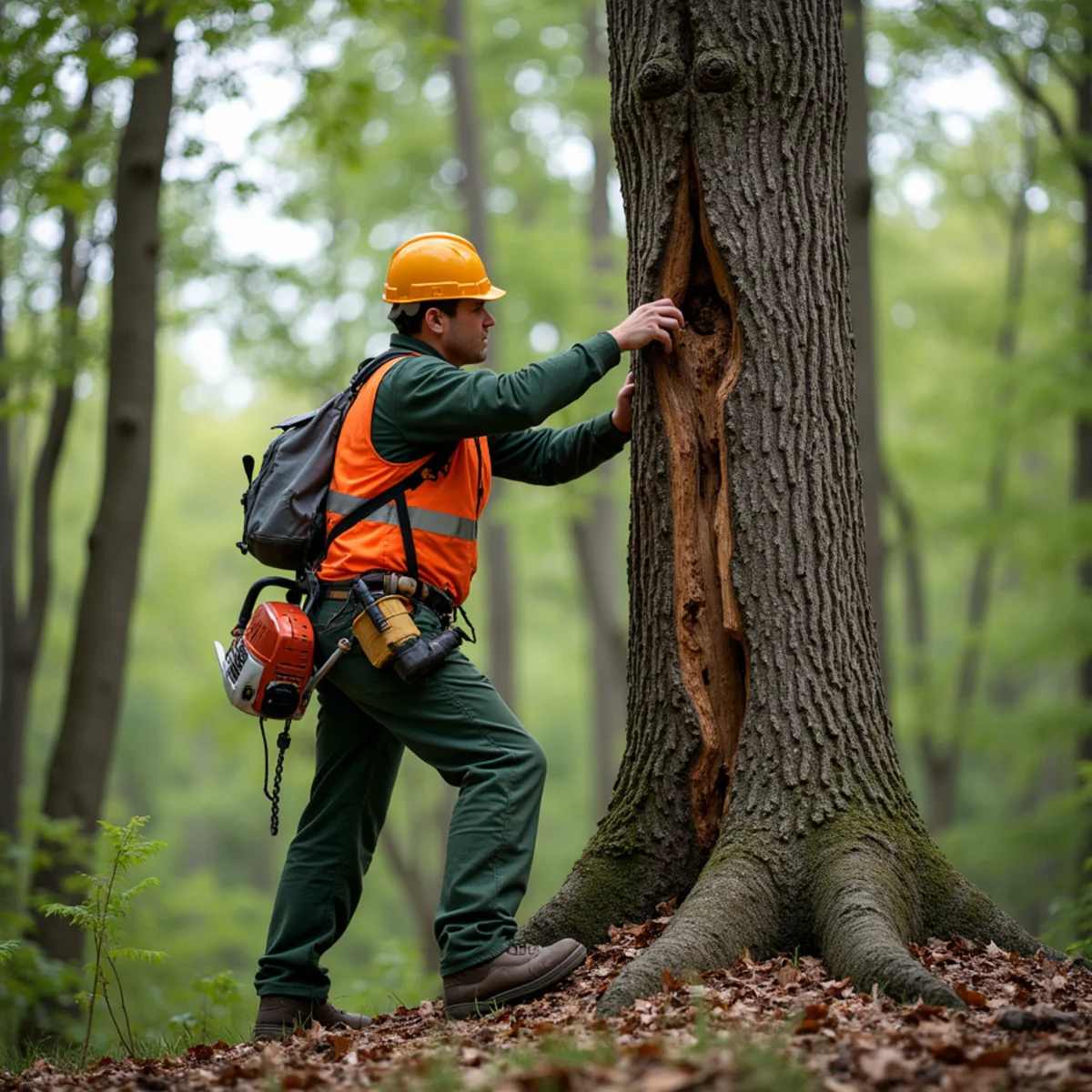
That means you spend money where it actually reduces risk, and you keep healthy trees that a less careful crew might have talked you into cutting down.
An assessment is also the cheapest insurance you can buy for a big tree. A half-hour evaluation that catches a failing union or an early root problem can head off a five-figure repair and, more importantly, keep a limb off someone's roof or car. We put the findings in plain language — here is the defect, here is what it threatens, here is the realistic timeline — so you can plan and budget instead of guessing. For buyers and sellers around Howard City, that same written picture settles arguments about the old maples on a property before a deal closes, and gives you leverage either way.
When to get a tree assessed
- A tree near your home or driveway has visible decay, cavities, or fungal conks.
- You have noticed a new or worsening lean.
- A large ash is thinning and you suspect emerald ash borer.
- Storm season is coming and you want targets checked in advance.
- You are buying property and want the big trees evaluated.
- A neighbor’s tree, or one near a shared line, is a concern.
What's Included in Our Tree Risk Assessment
What an assessment covers
- 1We identify the target — what the tree could damage if part or all of it failed.
- 2We inspect the root flare, trunk, unions, and canopy for defects.
- 3We evaluate lean, deadwood, decay, cracks, and attachment strength.
- 4We consider species, site, access, and overhead lines.
- 5We deliver a written recommendation: prune, support, monitor, or remove, and why.
Need tree risk assessment in Howard City?
Free written estimates.
What an assessment involves
For most homeowners a hazard assessment is folded into a free written estimate when work is likely. A detailed, documented evaluation for insurance, a real-estate transaction, or a dispute may be a separate service. We will tell you up front which applies to your situation.
- Number and size of trees to evaluate
- Whether you need a documented report or a work recommendation
- Access and site conditions
Mistakes People Make Judging a Risky Tree
Most homeowners either panic over a healthy tree or ignore a genuinely dangerous one. A good assessment corrects both — here is where gut instinct goes wrong.
- Assuming every lean is fatal. A tree that has leaned the same way for decades may be perfectly stable; a lean that appeared recently, with heaving soil, is the real alarm.
- Watching the canopy but not the base. Many failures start at the roots — cracked or lifting soil and basal decay matter more than a few dead twigs up top.
- Waiting until after a storm. The time to assess is on a calm day, not after a limb is already on the roof.
- Trusting a removal-first opinion with no evidence. If a crew says "take it down" but cannot name the defect and the target, get a second look.
- Forgetting the target. A defective tree deep in the woods is low-risk; the same tree over a bedroom is not. Risk is always defect plus target.
Why Choose D & B Tree Service for Tree Risk Assessment
Removal is never the default
We keep healthy trees a hurried crew would cut, and we say so plainly when removal is truly warranted.
Standards-based method
Our assessments follow recognized ANSI A300 tree-risk practices, not guesswork.
Honest, documented answers
You get a clear written recommendation you can act on — or get a second opinion against.
Local arborist knowledge
West Michigan crews who know ash decline, oak wilt, and storm patterns firsthand.
Tree Risk Assessment Across West Michigan
We assess hazard trees for homeowners, buyers, farms, and property managers across Howard City and the surrounding counties — Greenville, Stanton, Cedar Springs, Rockford, Newaygo, Big Rapids, and the rural and lakefront properties between them. If a big tree near your home has you worried, we can tell you where it really stands.
Tree Risk Assessment FAQs
Related Reading
7 Signs a Tree on Your Property May Be Hazardous
Trees usually warn you before they fail. Here are the signs worth checking on the trees near your home, driveway, and lines.
Tree CarePrune, Stabilize, or Remove? A Homeowner’s Decision Guide
Removal is not always the answer. Here is how a professional decides whether a tree should be pruned, supported, watched, or taken down.