Prune, Stabilize, or Remove? A Homeowner’s Decision Guide
By D & B Tree Service · January 21, 2026 · 6 min read
A good arborist does not treat removal as the default. Plenty of trees that a hurried crew would cut down can be kept safely with the right pruning or a support system. The decision comes down to a handful of questions about the defect, what the tree could hit, and how much sound structure remains.
Start with the target
Risk only exists where a tree can hurt something. The same defect on a tree deep in the woods and on a tree over your bedroom are very different problems. We always start by identifying the target — the house, driveway, play area, or line the tree could damage if part or all of it failed.
When pruning is the better choice
Pruning fits when the main structure is sound and a targeted set of cuts can solve the actual problem. Good candidates include:
- Dead or broken limbs are the main concern and the trunk is healthy.
- Branches need clearance from a roof, driveway, or walkway.
- A young tree has a correctable structure — competing leaders or crossing limbs.
- You want a risk-based recommendation instead of automatic removal.
One caution: proper pruning is not topping. Cutting big limbs back to stubs triggers weak regrowth and decay, and creates a worse problem in a few seasons. Insist on standard-based cuts.
When a support system may help
Cabling and bracing can manage the risk in a valuable tree with a weak union — a co-dominant stem, an included-bark crotch, or a heavy horizontal limb over a patio. Support does not make a defective tree risk-free, and the hardware needs periodic inspection, but for a landmark shade tree it can be the difference between keeping it and losing it. Learn more on our tree cabling and bracing page.
When removal is the responsible call
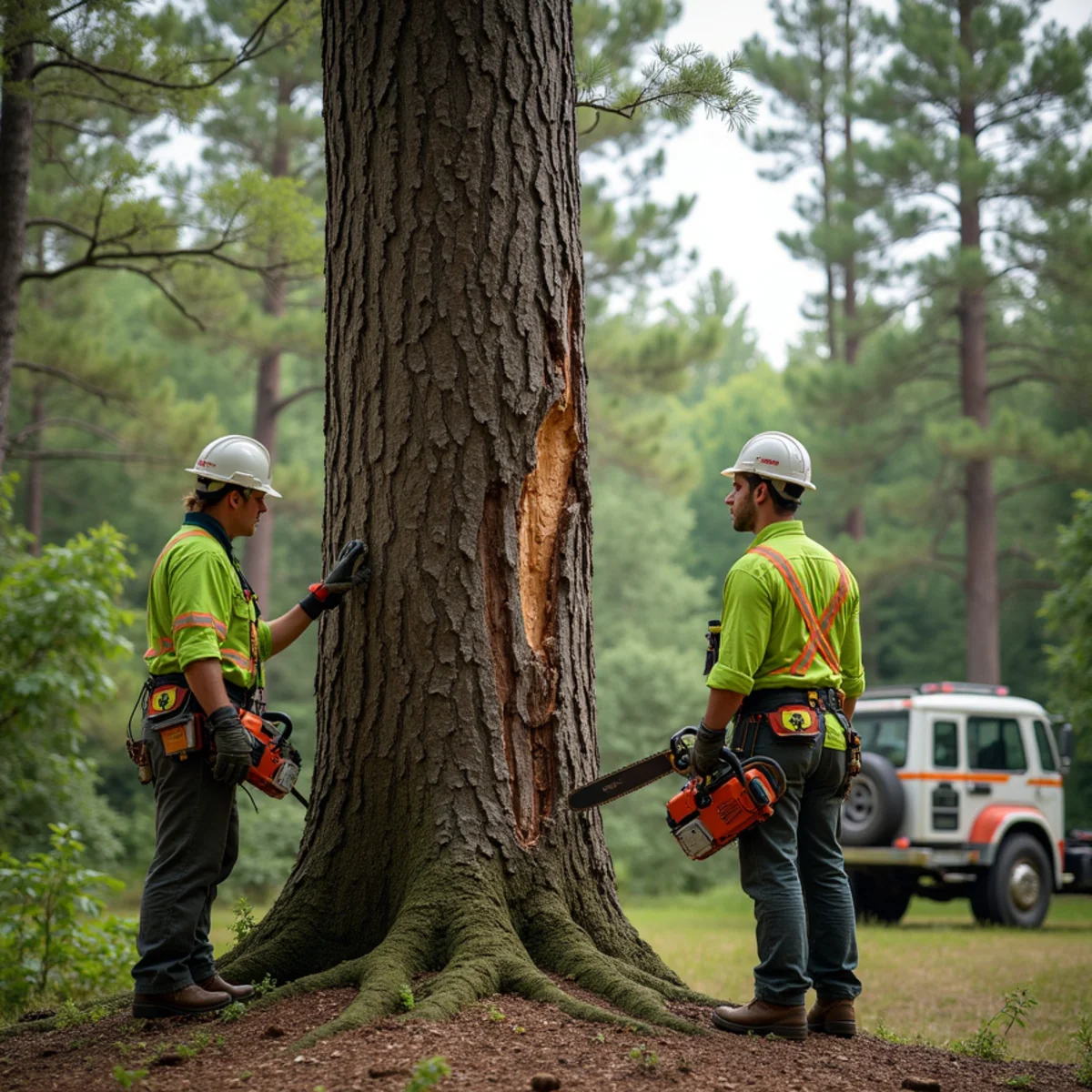
Removal is the right answer when a tree has failed, carries severe decay or a compromised trunk, is declining over a valuable target, or cannot be made acceptably safe through pruning or support. Warning signs include:
- A new or worsening lean, or soil heaving at the base.
- Large cavities, extensive bark loss, or fungal conks at the trunk or roots.
- A dead or largely dead canopy — common in ash killed by emerald ash borer.
- Cracked unions where major stems meet, especially over a target.
A clear removal recommendation is not alarmist when it is backed by observable defects and a real target. What you should expect is an explanation that connects the condition to the consequence — and a written scope, not a scare tactic.
Get a second opinion when it matters
What You Lose When You Remove a Tree Too Soon
Removal is permanent, and a mature tree is worth more than most homeowners realize until it is gone. A large shade tree on the south or west side of a house measurably cuts summer cooling costs, and buyers routinely pay a premium for established canopy — value a five-gallon replacement will not restore for two or three decades.
There are practical losses too. Take out the wrong tree and you can expose a lawn that never grew well in shade, open a wind funnel toward the house, or lose the privacy screen from the road. That is why we start every borderline case with the target and the defect, not the saw: if targeted pruning, a cable, or a season of monitoring can manage the risk, you keep the benefits while removing the danger.
None of this means clinging to a hazard. A tree with a failed trunk, extensive decay over the house, or a lifting root plate has moved past preservation, and pretending otherwise is its own expensive mistake. The goal is to make the call on evidence — defect, target, and structure — not on a crew’s convenience or a reflex to just take it down.
If a company recommends removing a big, healthy-looking tree, ask what defect, lean, decay, or attachment creates the risk. If the answer is vague, get a tree risk assessment before you authorize the saw. A good assessment often saves a tree — and sometimes it confirms that removal really is the safe choice.
D & B Tree Service provides free written estimates across Howard City and the surrounding West Michigan communities. For a storm hazard, call any time — the emergency line is answered 24/7.
Related services from D & B Tree Service
Serving tree service in Howard City, tree service in Rockford, tree service in Canadian Lakes and across West Michigan.