
Protecting Your Trees from Snow and Ice Damage
By D & B Tree Service · April 1, 2026 · 6 min read
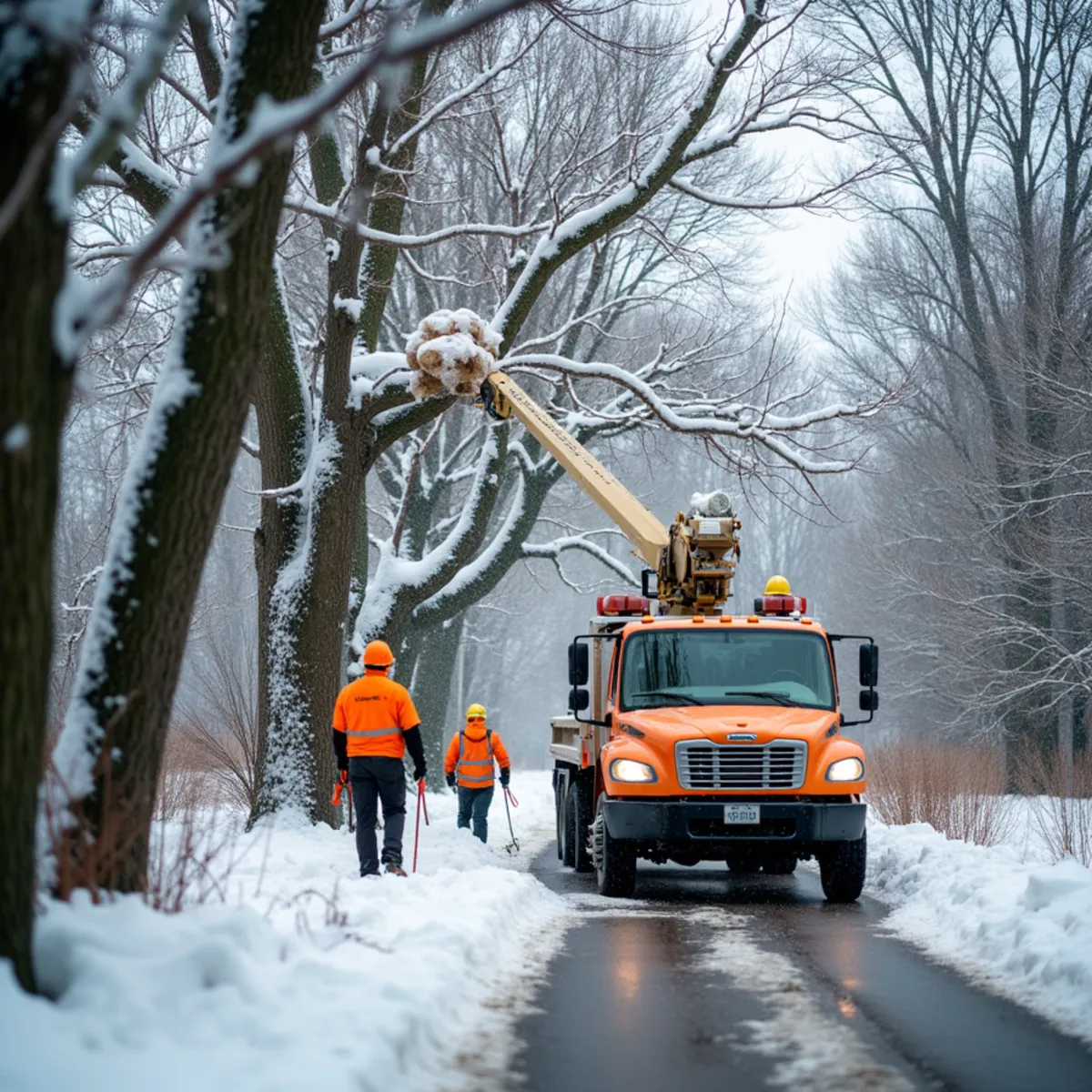
West Michigan winters are hard on trees. Wet, heavy snow and ice can add tremendous weight to a canopy, bending and snapping limbs that would easily handle summer wind. The good news is that a lot of winter tree failure is preventable with some attention in the fall — and knowing what to do when a storm does load your trees can keep a bad night from getting worse.
Why snow and ice break trees
Ice can add many times a branch’s own weight, and it collects on every twig and surface, turning a broad canopy into a heavy sail. Weak unions, over-extended limbs, and existing deadwood are the first to go. Evergreens with dense foliage and multi-stemmed trees are especially prone to splitting under the load.
Prevention starts in the fall
- Remove deadwood and hazard limbs before winter — they are the first to fail under load.
- Have weak, co-dominant unions assessed; reduction pruning or cabling can prevent a split.
- Thin dense canopies where appropriate so snow and ice have less to grab.
- Clear limbs hanging over the driveway, roof, and power drop while it is easy.
- Address leaning or declining trees near the house before storm season.
A dormant-season assessment is the ideal time to catch these problems, because the bare structure makes defects easy to see.
During and after an ice storm
When a storm has loaded your trees, resist the urge to knock ice or snow off bent limbs — shaking a loaded, brittle branch is a good way to make it snap toward you. Keep people and vehicles clear of sagging limbs and stay away from any branch near a line. Let the ice melt and the tree recover on its own where possible.
- 1Keep clear of bent and loaded limbs — do not stand or park under them.
- 2Do not try to shake, pull, or beat ice off branches.
- 3Watch for cracked unions and new leans once the load releases.
- 4Call for an assessment if limbs are broken or a tree is threatening a structure.
When it becomes an emergency
Which Trees Fail First in an Ice Storm — and Why
Not all trees are equally at risk when the ice comes. Knowing which ones on your property are vulnerable tells you where to look and what to address before winter.
- Bradford pears and other weak-wooded ornamentals top the list — their tight, upright unions split under almost any heavy load.
- Multi-stemmed and co-dominant trees, where two trunks of similar size compete, tend to peel apart at the union when ice loads both leaders.
- Fast-growing species like silver maple and willow have weaker wood that bends and breaks more readily than slow-growing oak or hickory.
- Over-extended limbs — long horizontal branches with a lot of twiggy growth at the end — collect enormous ice weight far from the trunk.
- Dense evergreens, especially arborvitae and upright junipers, catch snow and ice like a sail and splay open or uproot.
- Any tree already carrying deadwood or an old wound, which are the first points to give way.
The physics is unforgiving: ice can add many times a branch’s own weight, and every twig collects it. That is why the fixes are all about load — reducing the weight a weak structure carries through dormant-season thinning and deadwood removal, and reinforcing valuable trees with cabling before the storm rather than after.
The morning after
When you wake up to a glazed landscape, the hardest advice is the right advice: leave loaded limbs alone. Do not knock or shake ice off — a weighted, brittle branch can whip back or snap toward you. Keep people and cars out from under bent limbs, let the ice melt and the tree recover, and only then assess what actually broke. Save the emergency call for limbs on the house, splits over walkways, or anything touching a line.
A limb resting on the roof, a split trunk over a walkway, or any branch on a line is a call-now situation. Our emergency line is answered around the clock through the winter for exactly these events. For the broader storm and insurance workflow, see our claims guide.
D & B Tree Service provides free written estimates across Howard City and the surrounding West Michigan communities. For a storm hazard, call any time — the emergency line is answered 24/7.
Related services from D & B Tree Service
Serving tree service in Howard City, tree service in Big Rapids, tree service in Reed City and across West Michigan.