
Spring Storm Prep: Getting Your Trees Ready for West Michigan Weather
By D & B Tree Service · May 27, 2026 · 5 min read
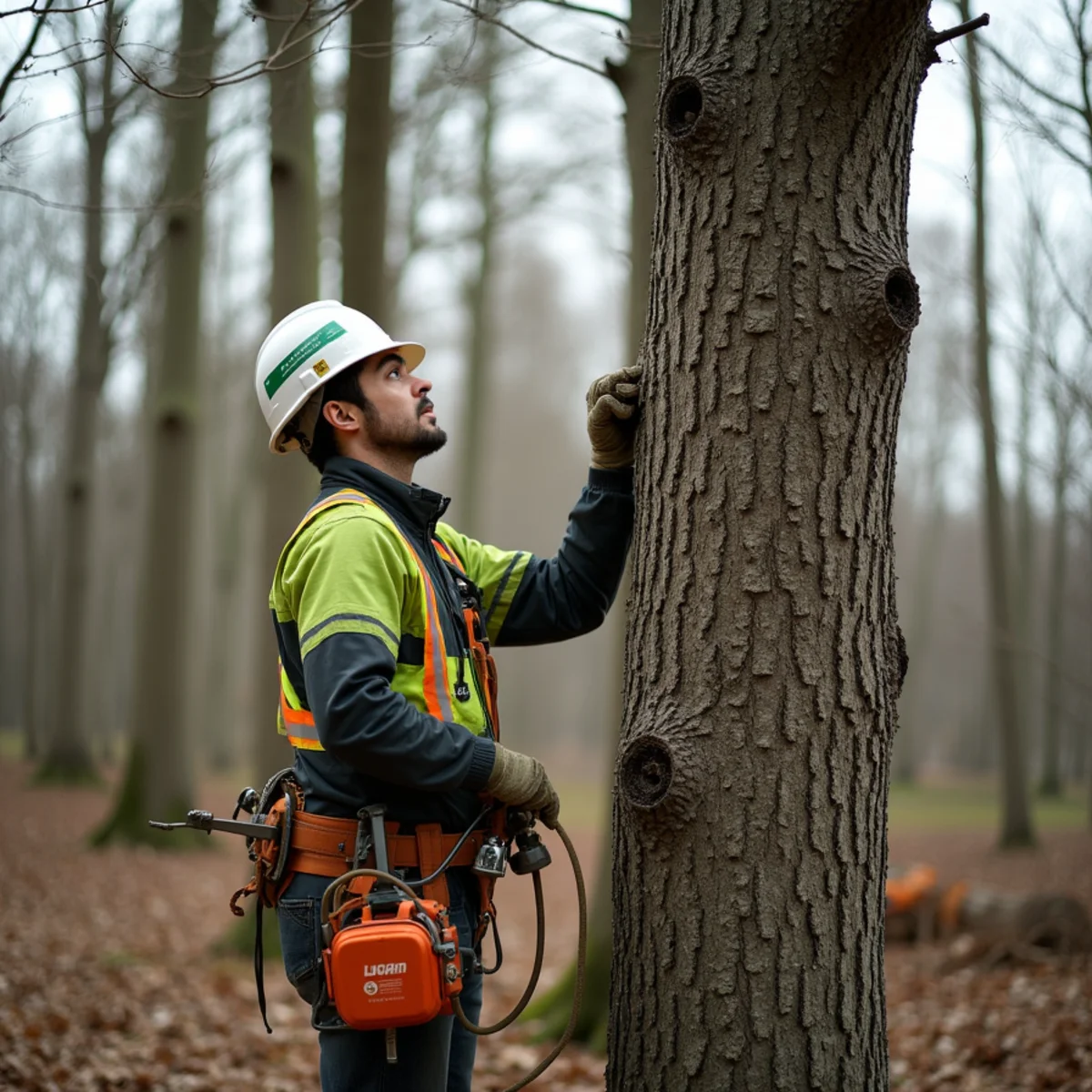
West Michigan gets its share of severe weather — spring thunderstorms, straight-line winds, and the occasional summer microburst. The single best thing you can do to protect your home is deal with hazard trees before the storm hits, not after. A little preparation now saves a lot of expense and stress later.
Why pre-season prep pays off
Storms find the weak points. A dead ash, a limb hanging over the roof, a tree with a cracked union — these are the ones that come down first when the wind picks up. Removing or reducing them on a calm spring day is far cheaper and safer than an emergency call in the middle of the night, and it keeps a failing tree from taking out your roof, fence, or power drop.
Your spring tree checklist
- Walk your property and look for the warning signs of a hazardous tree — new leans, deadwood, cavities, and cracked unions.
- Prioritize the trees that could reach your house, driveway, or the line to your home.
- Deal with dead ash before they get more brittle — they are the top storm-failure risk here.
- Have limbs cleared off the roof, gutters, and service drop while it is easy.
- Get weak, co-dominant unions assessed for reduction pruning or cabling.
- Schedule any non-emergency oak work for outside the mid-April to mid-July oak wilt window.
Prune for wind, not just looks
Proper pruning can actually make a tree more wind-resistant by reducing the "sail" effect of a dense canopy and removing the deadwood and weak limbs most likely to fail. This is not topping — it is targeted thinning and reduction done to standard. A tree that lets the wind pass through is far less likely to fail than one carrying a heavy, dense crown.
When to call a pro
A Post-Winter Tree Checkup, Step by Step
Spring is the natural time to assess what winter did and get ahead of the storm season coming. Walk your property as the snow melts and work through this checklist while the damage is easy to spot and there is still time to act.
- 1Look for winter breakage. Snow and ice load leaves cracked unions, hanging limbs, and partial splits that may not have fully failed yet — these go first in a spring windstorm.
- 2Check for a new lean. Saturated spring ground plus wind can start a tree tipping; look for fresh soil cracking or heaving at the base.
- 3Assess the ash. Spring is when surviving ash leaf out — or fail to. A bare or barely-leafing ash has likely succumbed and should be scheduled for removal.
- 4Note what did not leaf out. Any tree or major limb that stays bare while everything else greens up is dead and worth a closer look.
- 5Clear the targets. Prioritize anything overhanging the house, driveway, or power drop for pruning before the summer storms arrive.
Time the work right
Most of this pruning is ideal in the tail of the dormant season, before bud break — with the critical exception of oaks, which should not be pruned from mid-April through mid-July because of oak wilt. Deadwood and clearly hazardous limbs, though, can come off any time; safety does not wait for the calendar.
Why spring beats summer for this
Acting in spring buys you two things: the defects are visible before the leaves hide them, and you get the work scheduled before storm season fills every crew’s calendar. The homeowner who books a hazard limb in April is not the one scrambling for an emergency crew in July.
If you have a large tree near the house that worries you, a spring tree risk assessment is the smart move. We will tell you honestly whether it needs pruning, a support system, monitoring, or removal — so you head into storm season knowing your trees are ready. And if a storm does catch you off guard, our emergency line is answered 24/7.
D & B Tree Service provides free written estimates across Howard City and the surrounding West Michigan communities. For a storm hazard, call any time — the emergency line is answered 24/7.
Related services from D & B Tree Service
Serving tree service in Howard City, tree service in Cedar Springs, tree service in Newaygo and across West Michigan.