Tree Cabling and Bracing, Explained
By D & B Tree Service · March 25, 2026 · 5 min read
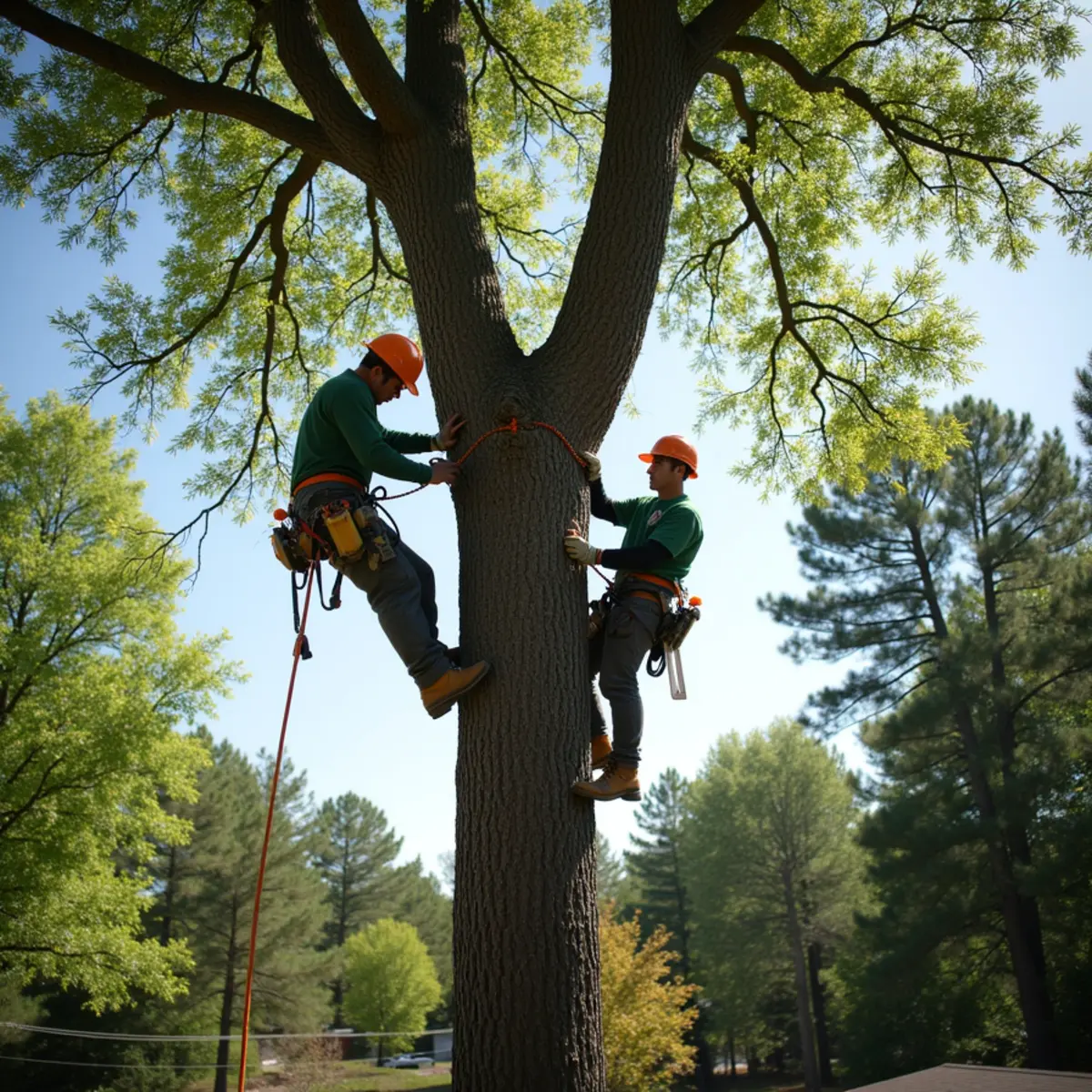
When a big, valuable tree has a structural weakness, removal is not the only option. Cabling and bracing — collectively, support systems — can reduce the chance of failure and let you keep a tree that would otherwise have to come down. They are not magic, and they are not right for every tree, but for the right candidate they are a smart investment.
What cabling and bracing do
Cabling uses flexible steel cable installed high in the canopy to limit how far two stems or limbs can move apart in the wind, reducing stress on a weak union. Bracing uses threaded rods through the wood to add rigid support across a split or a weak crotch, often paired with cables. Together they help a tree hold itself together under load.
Good candidates for support
- A co-dominant tree with two competing leaders and a weak, included-bark union.
- A heavy horizontal limb overhanging a patio, drive, or structure.
- A tree that has begun to split but still has real preservation value.
- A mature specimen where reducing risk is worth more than removal.
What support systems cannot do
Be clear-eyed about the limits. A cable manages and reduces risk — it does not make a defective tree risk-free. Hardware also needs periodic inspection to stay effective. And if a tree is too far gone — extensive decay, a failed trunk — support only delays the inevitable and can create a false sense of security. An honest arborist will tell you when removal is the safer investment.
Support plus pruning
Cabling is often paired with reduction pruning that lightens the load on the weak part of the tree. Reducing the weight the union has to carry, and then cabling what remains, is frequently more effective than either step alone.
The bottom line
The Hardware Behind a Support System — and What Upkeep It Needs
A support system is not one thing. Knowing the pieces helps you understand what a proposal is actually offering and why it costs what it does.
Dynamic (flexible) cabling
The modern default for most residential trees is a synthetic, slightly elastic cable installed high in the canopy. It lets the tree keep moving and building its own reaction wood while limiting how far a weak union can spread in a gust. Because it flexes, it stresses the tree less than old-style rigid steel and needs no drilling into the trunk.
Static (steel) cabling
Traditional galvanized cable and eye bolts are stronger and more rigid, still used where a situation calls for maximum restraint. It is drilled and bolted into the stems, so installation is more invasive and periodic inspection matters more.
Bracing rods
For a union that has already begun to split, threaded steel rods run through the wood to physically hold the crack together. Bracing is almost always paired with a cable above it — the rod handles the existing split, the cable manages the movement that caused it.
The maintenance nobody mentions
Hardware is not install-and-forget. Cables and braces should be inspected every few years — checked for tension, for the tree growing around the hardware, and for wear. A cable ignored for a decade can become part of the problem rather than the solution, so a reputable installer builds that inspection schedule into the plan and tells you about it up front.
If you have a landmark shade tree, a heritage oak, or a specimen you would hate to lose, ask about a support system before you accept a removal recommendation. A tree risk assessment will tell you whether your tree is a candidate — and our cabling and bracing service explains how installation and inspection work.
D & B Tree Service provides free written estimates across Howard City and the surrounding West Michigan communities. For a storm hazard, call any time — the emergency line is answered 24/7.
Related services from D & B Tree Service
Serving tree service in Howard City, tree service in Rockford, tree service in Canadian Lakes and across West Michigan.