Storm-Damaged Trees and Insurance: A Practical Claims Guide
By D & B Tree Service · February 11, 2026 · 7 min read
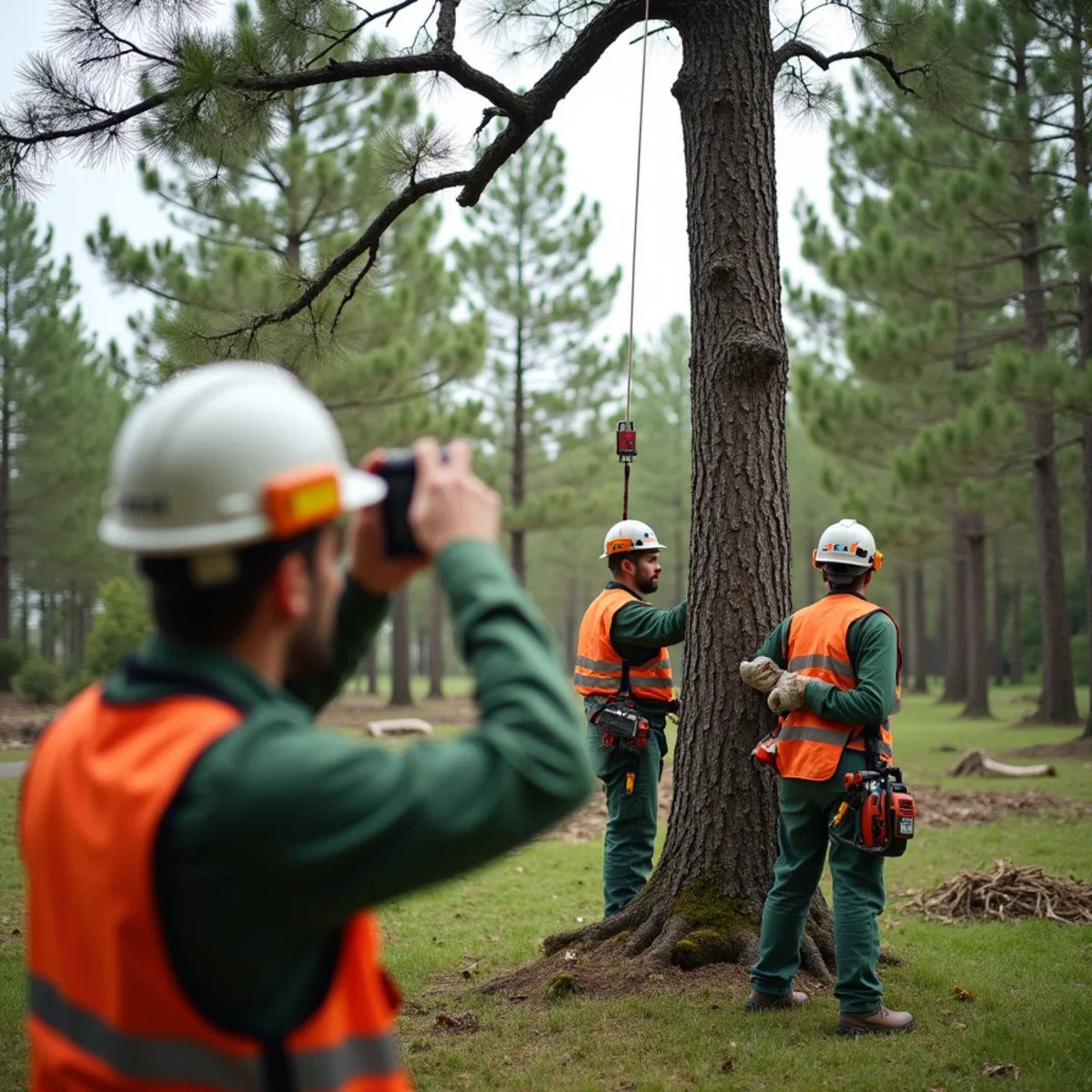
After a storm, the tree work is only half the job — the other half is documentation. Handled well, a clear record and a properly written scope make your insurance claim far smoother. Handled poorly, missing photos and vague lump-sum invoices can cost you. Here is the practical sequence we recommend, drawn from how West Michigan claims actually go.
First, safety — then documentation
Never delay an urgent safety response to build a perfect photo record. Make the area safe first: get people clear, stay away from lines and hanging material, and call the utility or 911 if needed. Once the scene is stable, document from a safe distance before non-essential cleanup begins.
What to photograph
- The whole tree, showing the lean, failure, or canopy condition.
- Close-ups of broken limbs, trunk cracks, or lifted roots.
- The damaged target — roof, siding, fence, or vehicle.
- Wide shots showing the tree’s relationship to the structure and property lines.
- The access route and any conditions that limit equipment.
The claims sequence
- 1Make the area safe and contact emergency services or the utility if required.
- 2Photograph the damage from a safe distance before non-essential cleanup.
- 3Contact your insurer and ask which documentation, deductible, emergency-mitigation, and debris-removal rules apply.
- 4Request a written tree-service scope that separates immediate stabilization from permanent removal and restoration.
- 5Preserve every estimate, approval, receipt, and completion record.
- 6Confirm the final cleanup and any remaining stump, roof, fence, or lawn work.
Why a line-item scope matters
Insurers want to see what they are paying for. A scope that separates emergency stabilization, removal, haul-away, stump grinding, and restoration lets the adjuster match each item to your coverage. A single lump sum invites questions and delays. We write our storm scopes this way for exactly this reason.
What coverage usually depends on
We are not insurance advisors, and every policy is different, but coverage generally turns on the cause of damage, what was hit, your deductible, and your insurer’s decision. Many policies pay to remove a tree that damaged a covered structure, while a tree that fell in the yard without hitting anything may or may not be covered. The honest answer is: contact your insurer, keep your records, and let them make the call. What we provide is the documentation, scope clarity, and receipts that support it.
What Storm-Tree Coverage Usually Includes (and What It Doesn’t)
Every policy is different and we are not insurance advisors, but a few patterns hold often enough to be worth knowing before you call your carrier. Always confirm the specifics against your own policy.
- A tree that hits a covered structure — house, garage, fence, shed — is commonly covered, often including removal of the tree from the structure, up to policy limits and minus your deductible.
- A tree that falls in the yard and hits nothing is frequently not covered for removal, or only up to a small capped amount, because no insured structure was damaged.
- A neighbor’s tree that falls on your property is usually handled by your policy, not theirs — a surprise to most homeowners — unless the tree was documented as dead or hazardous beforehand.
- Damage to a vehicle from a falling tree typically falls under your auto comprehensive coverage, not homeowners.
- Additional living expenses may apply if a covered tree strike makes the home uninhabitable.
The practical takeaway: document everything, call your carrier before non-essential cleanup, and ask specifically about debris-removal limits and emergency-mitigation rules. A written, itemized scope from your tree service — separating stabilization, removal, and stump work — is what lets the adjuster match each line to your coverage.
For the first-response side of this — the safety steps before documentation — see our guide on what to do when a tree falls on your house.
D & B Tree Service provides free written estimates across Howard City and the surrounding West Michigan communities. For a storm hazard, call any time — the emergency line is answered 24/7.
Related services from D & B Tree Service
Serving tree service in Howard City, tree service in Greenville, tree service in Big Rapids and across West Michigan.