How We Protect Your Lawn During Tree Removal
By D & B Tree Service · April 15, 2026 · 5 min read
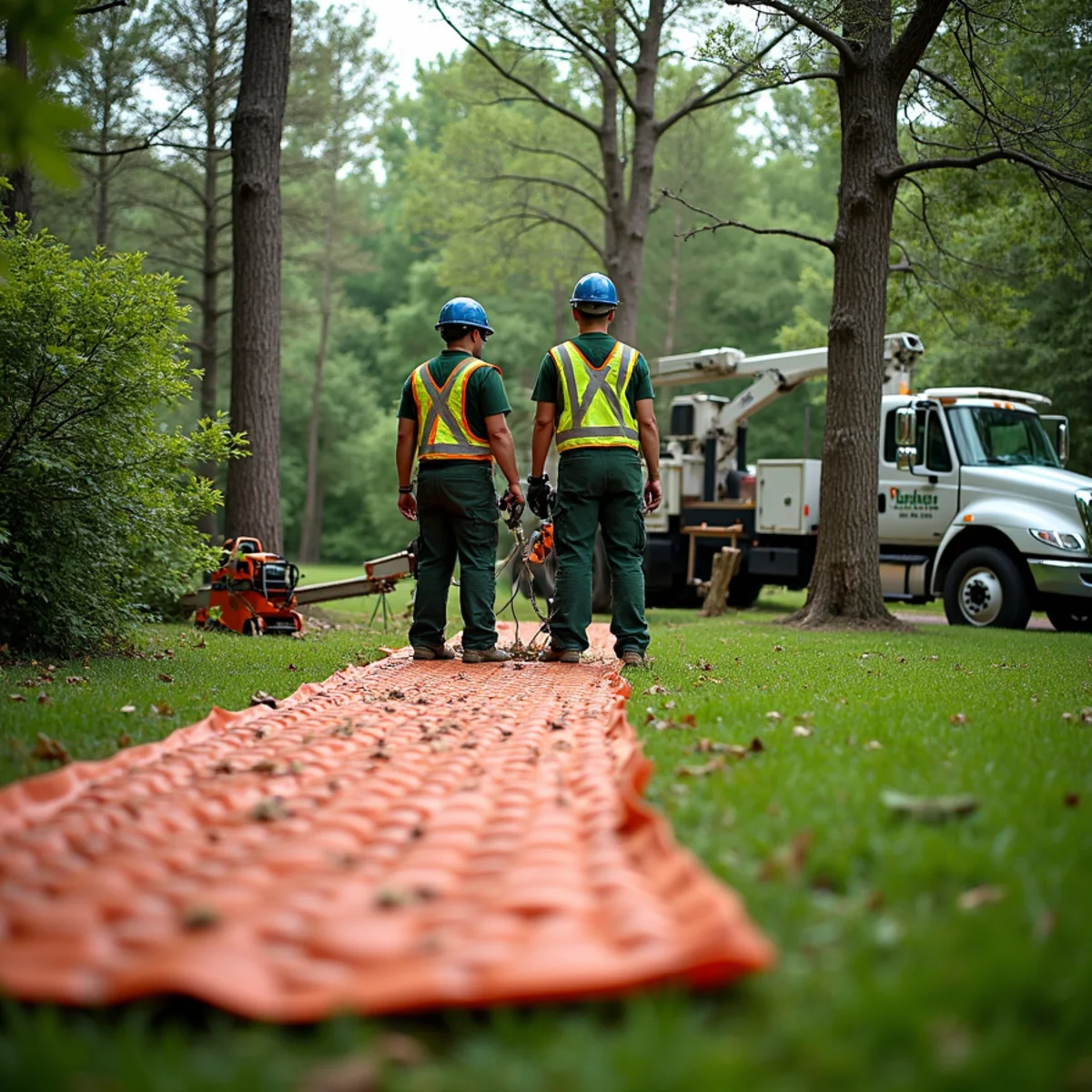
One of the most common complaints homeowners have after tree work is not about the tree at all — it is about the ruts, torn turf, and mess left behind. A careful crew treats your lawn as part of the job, especially here in West Michigan where so many properties sit on soft, wet, or wooded ground near creeks and low areas.
It starts with the access plan
Before any equipment rolls onto your property, we plan the route. Where the ground is soft, where the low spots are, and how to reach the tree with the least turf impact all get worked out first. On wet acreage near a creek or lake, the access plan matters as much as the cutting plan.
The tools of turf protection
- Ground-protection mats that spread equipment weight and prevent rutting.
- Staging heavy equipment on the driveway or firm ground where possible.
- Rigging sections down instead of dropping them, to avoid divots and impact.
- Choosing climbing over heavy equipment when it is gentler on the yard.
- Timing — frozen or dry ground handles traffic far better than saturated soil.
Protecting more than grass
A good crew also watches for the things that are easy to damage and expensive to fix: irrigation heads, landscape beds, septic fields and lids, buried cable, fences, and driveway edges. We identify these before we start and work around them, and we point out anything we are concerned about up front.
Waterway-aware work
On properties near Tamarack Creek, the Little Muskegon, or one of the many lakes around here, we take extra care to keep logs, chips, and fuel away from the water and drainage paths, and to manage soil disturbance on the banks. It is the right thing to do and it keeps your property — and the water — in good shape.
A clean finish
How Wet Ground Changes a Tree Job in West Michigan
A huge share of the properties we work sit on soft, low, or wooded ground — near Tamarack Creek, the Little Muskegon, or one of the countless small lakes. On that ground, the difference between a clean job and a rutted mess is almost entirely about planning the access before the work, not repairing the lawn after it.
- We read the ground first. Soft spots, low areas, and the route from the road to the tree are scouted before a single machine moves.
- We stage on firm ground. Trucks and chippers live on the driveway or a gravel pad whenever possible, not on the turf.
- We spread the load. Ground-protection mats under equipment distribute weight so tires and tracks do not sink and tear.
- We favor climbing on delicate lawns. Sometimes the gentlest tool is a climber on rope, not a machine driven across the yard.
- We time it when we can. Frozen or dry ground carries equipment far better than saturated spring soil, so we will suggest waiting when the calendar allows.
It is also about the things around the lawn that are easy to wreck and expensive to fix — irrigation heads, septic lids, buried cable, landscape beds, and driveway edges. We identify those before we start, work around them, and tell you up front about anything we are concerned we cannot avoid.
When we are done, we rake the work area and do a final walk-through with you. Cleanup to an agreed standard is part of the scope, not an afterthought. If you want to know exactly what "clean" means before you hire anyone, make sure it is written into the estimate — our estimate checklist explains how.
D & B Tree Service provides free written estimates across Howard City and the surrounding West Michigan communities. For a storm hazard, call any time — the emergency line is answered 24/7.
Related services from D & B Tree Service
Serving tree service in Howard City, tree service in Pierson, tree service in Lakeview and across West Michigan.