
Oak Wilt in Michigan: Why You Shouldn’t Prune Oaks in Summer
By D & B Tree Service · February 4, 2026 · 7 min read
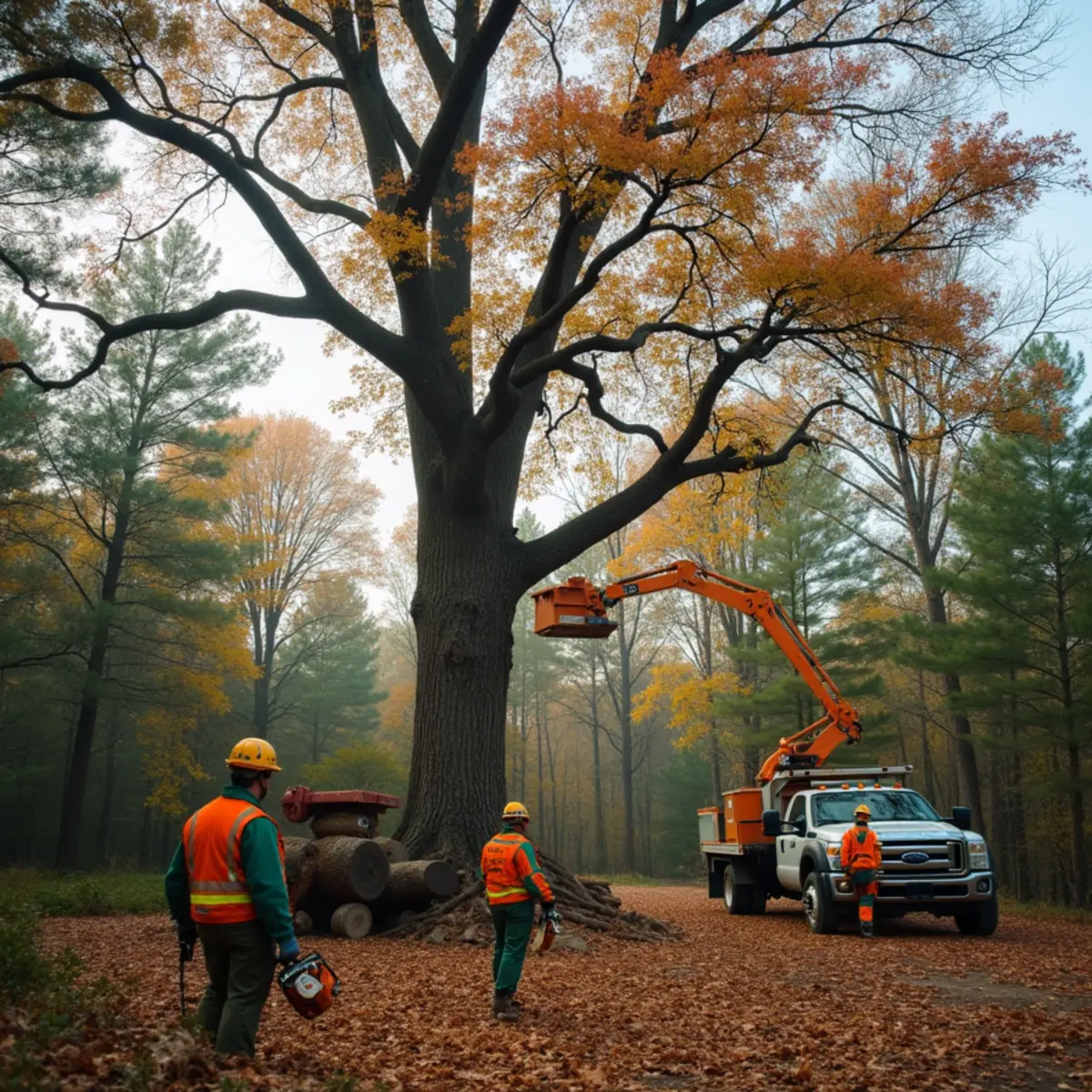
Oak wilt is one of the most serious tree diseases in West Michigan, and it is largely preventable. It is caused by a fungus that clogs an oak’s water-conducting vessels, and it can kill a healthy red oak within weeks to a single season. Worse, it spreads through connected root systems to the oaks around it. The single most important thing a homeowner can do is avoid wounding oaks at the wrong time of year.
The high-risk window: mid-April to mid-July
The Michigan Department of Natural Resources advises against pruning or wounding red oaks from roughly April 15 to July 15. During that window, sap-feeding beetles are active and are attracted to the sweet-smelling sap of fresh cuts. A beetle that has visited an infected tree can carry fungal spores straight to your oak’s open wound. Outside that window — especially in the dormant season — the risk drops sharply.
This is why a careful crew will reschedule non-emergency oak work rather than prune in June. It is also why storm damage to an oak in summer is treated as a special case, with protective steps like promptly dressing the wound.
How to recognize oak wilt
- Rapid leaf browning and drop in summer, often starting at the top of the tree.
- Wilting that progresses quickly, sometimes over just a few weeks.
- Leaves that turn bronze or brown from the tip and margins inward.
- A group of oaks declining together along a shared root zone.
Red oaks (the group with pointed leaf lobes) are far more susceptible and die faster than white oaks (rounded lobes). If you see these signs, do not wait — the disease can move to neighboring oaks underground.
What to do if you suspect oak wilt
- 1Stop any planned pruning on your oaks immediately.
- 2Have the tree assessed to confirm the likely cause.
- 3Ask about root-graft disruption if healthy oaks are nearby and connected.
- 4Handle infected wood responsibly — do not move or store it in a way that spreads spore-bearing fungal mats.
Prevention is the whole game
How Oak Wilt Spreads — and How to Stop It
Oak wilt moves two ways, and understanding both is what separates real protection from wishful thinking.
The first is overland, by sap-feeding beetles. In spring and early summer these beetles visit the fungal mats under the bark of trees killed the year before, pick up spores, and carry them to the fresh wound of a healthy oak — a pruning cut, a storm break, even a nick from a string trimmer. That is the entire reason for the mid-April-to-mid-July no-cut window: no fresh wound, no doorway for the beetle.
The second is underground, and it is the one homeowners miss. Oaks of the same species growing near each other graft their roots together, and once one tree is infected the fungus can travel root-to-root to its neighbors, killing a whole cluster over a couple of seasons. Stopping that spread often means severing the root connections between a sick tree and the healthy ones around it — usually by trenching or vibratory plow deep enough to cut the grafts — before or at the time of removal.
For a homeowner with a stand of red oaks, that changes the response. If one oak browns and drops its leaves in July, the goal is not just to remove that tree; it is to protect the ones it is connected to, quickly, before the underground spread gets ahead of you.
Because there is no easy cure once a red oak is infected, prevention matters most: prune oaks only in the dormant season, avoid mechanical damage to oak trunks and roots during construction, and act fast to protect neighbors if one oak goes down. When we remove or prune oaks, we plan the timing around this advisory as a matter of routine — it is exactly the kind of local knowledge that protects your trees. See our oak wilt and diseased tree removal service for more.
D & B Tree Service provides free written estimates across Howard City and the surrounding West Michigan communities. For a storm hazard, call any time — the emergency line is answered 24/7.
Related services from D & B Tree Service
Serving tree service in Howard City, tree service in Pierson, tree service in Newaygo and across West Michigan.