How Much Does Tree Removal Cost in Howard City, MI?
By D & B Tree Service · January 14, 2026 · 7 min read
One of the first questions every homeowner asks is simple: what will it cost to get this tree down? It is a fair question, and it deserves an honest answer — which is that the price depends far more on where the tree stands than on how tall it is. Below is how tree-removal pricing actually works in the Howard City area, using published regional figures for context rather than a number pulled from thin air.
The honest starting point: regional price ranges
Published Grand Rapids-area figures place many residential tree removals in a range of roughly $400 to $1,900, with an approximate average around $1,100. A second local source describes broader routine residential work reaching $500 to $5,000 once size, access, structures, and equipment make a job more complex. Treat these as regional comparisons, not a Howard City quote — the only way to know your price is an on-site look.
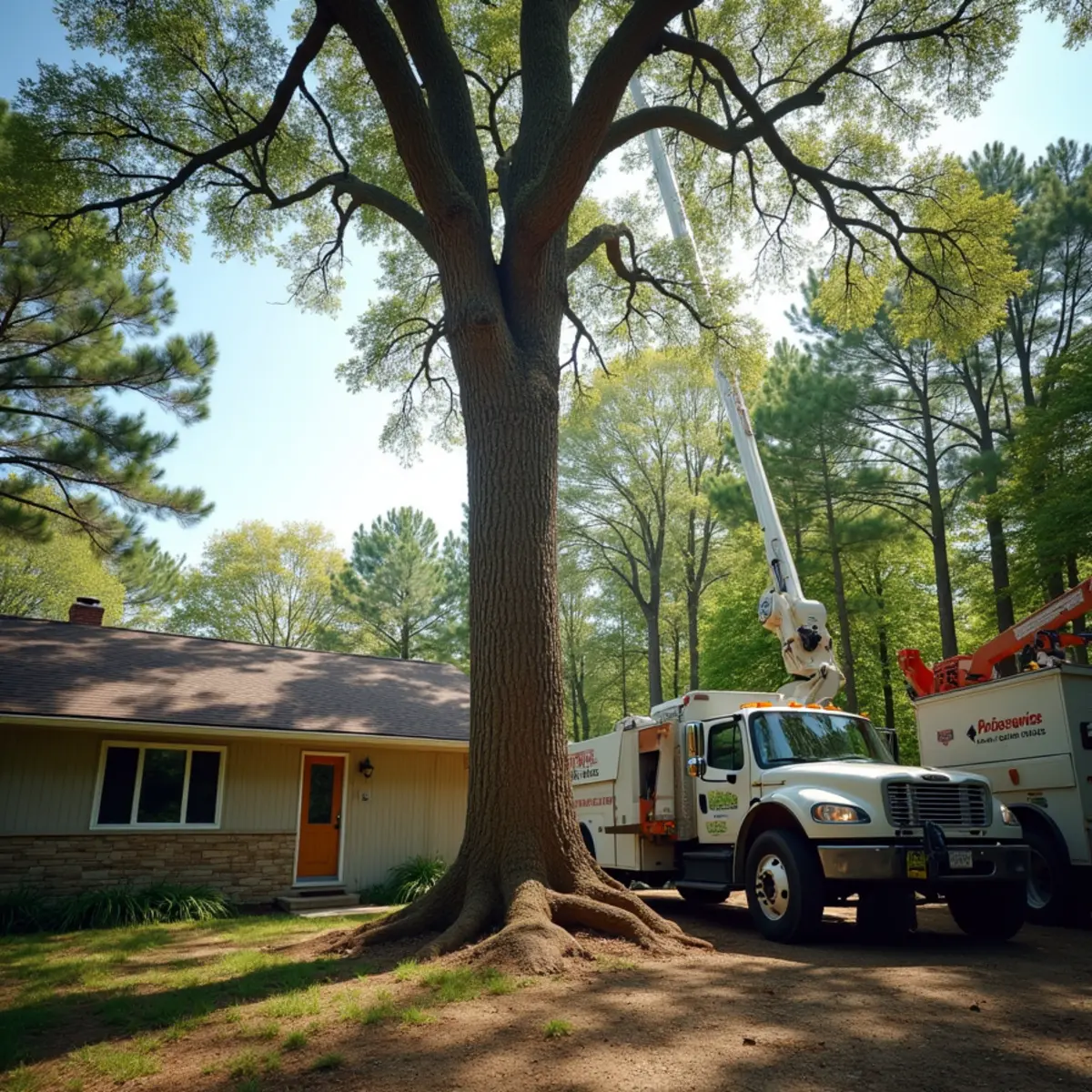
Why such a wide range? Because two trees of identical size can cost very different amounts depending on what surrounds them. A dead ash in an open field is a quick job. The same tree leaning over a garage, a fence, and a power drop is a careful, staged removal.
The factors that actually move the price
- Size and condition — height, trunk diameter, lean, and decay all matter, and dead wood can add risk that changes the method.
- Proximity to targets — a tree near a roof, garage, fence, driveway, vehicle, or power line is more work to remove safely.
- Drop zone versus rigging — if there is open space to fell the tree it comes down fast; if not, we lower it in sections on ropes, which takes longer.
- Equipment — climbing, a bucket truck, or a crane each change the cost, chosen to fit the site.
- Access — driveway width, gates, slope, soft ground, and how far equipment must travel to reach the tree.
- Cleanup scope — haul-away, stump grinding, stump depth, and surface restoration are separate line items.
What complexity looks like in real numbers
Public municipal bids give a useful window into how diameter drives price. One Michigan bid listed a large-tree labor rate around $225 per hour; another listed removals scaling from about $300 for 12-to-19-inch trees up to $2,800 for trees over 44 inches. Those are contract figures, not retail Howard City quotes, but they show exactly why a bigger, more complex tree costs more — there is simply more wood, more weight, and more risk to manage.
How to compare estimates the smart way
The single best thing you can do is ask every company to break the estimate into separate line items. When removal, haul-away, stump grinding, and restoration are listed separately, you can compare three quotes apples-to-apples instead of guessing what a lump sum includes.
- 1Ask for the reason for removal in writing, not just the price.
- 2Confirm whether logs and chips stay on site or are hauled away.
- 3Check whether stump grinding — and the grind depth — is included or extra.
- 4Verify current liability insurance before you sign anything.
- 5Make sure the cleanup standard is spelled out.
How to Keep Tree-Removal Costs Down
You cannot change a tree’s size or where it stands, but a handful of choices genuinely move the final number — and none of them involve hiring an uninsured crew off a storm-chasing flyer.
- Bundle jobs. Removing three trees in one visit costs less per tree than three separate trips, because most of the setup and travel is shared.
- Keep the wood. Leaving logs cut to firewood length, or chips for mulch, trims the haul-away line off your estimate.
- Skip the rush when you safely can. A non-emergency removal booked in the slower winter months — frozen ground, more crew openings — is often cheaper and gentler on the lawn.
- Handle access. Unlocking gates, moving vehicles, and clearing the drive lets the crew work instead of billing time to reach the tree.
- Deal with hazards early. A dead ash removed on your schedule is a planned job; the same tree after it drops on the garage is an emergency call plus a repair bill.
What never saves money is skipping insurance verification or accepting a vague lump sum. The cheapest quote that leaves a stump, ruts, and a pile of logs behind turns out to be the most expensive once you add up the finishing work.
A low number that leaves logs in your yard and a ground-level stump behind is not really cheaper — it just moves the cost to next weekend. For more on reading a quote, see our guide on what a written tree estimate should include.
D & B Tree Service provides free written estimates across Howard City and the surrounding West Michigan communities. For a storm hazard, call any time — the emergency line is answered 24/7.
Related services from D & B Tree Service
Serving tree service in Howard City, tree service in Greenville, tree service in Big Rapids and across West Michigan.