Emerald Ash Borer: Why Your Dead Ash Trees Need to Come Down
By D & B Tree Service · March 18, 2026 · 6 min read
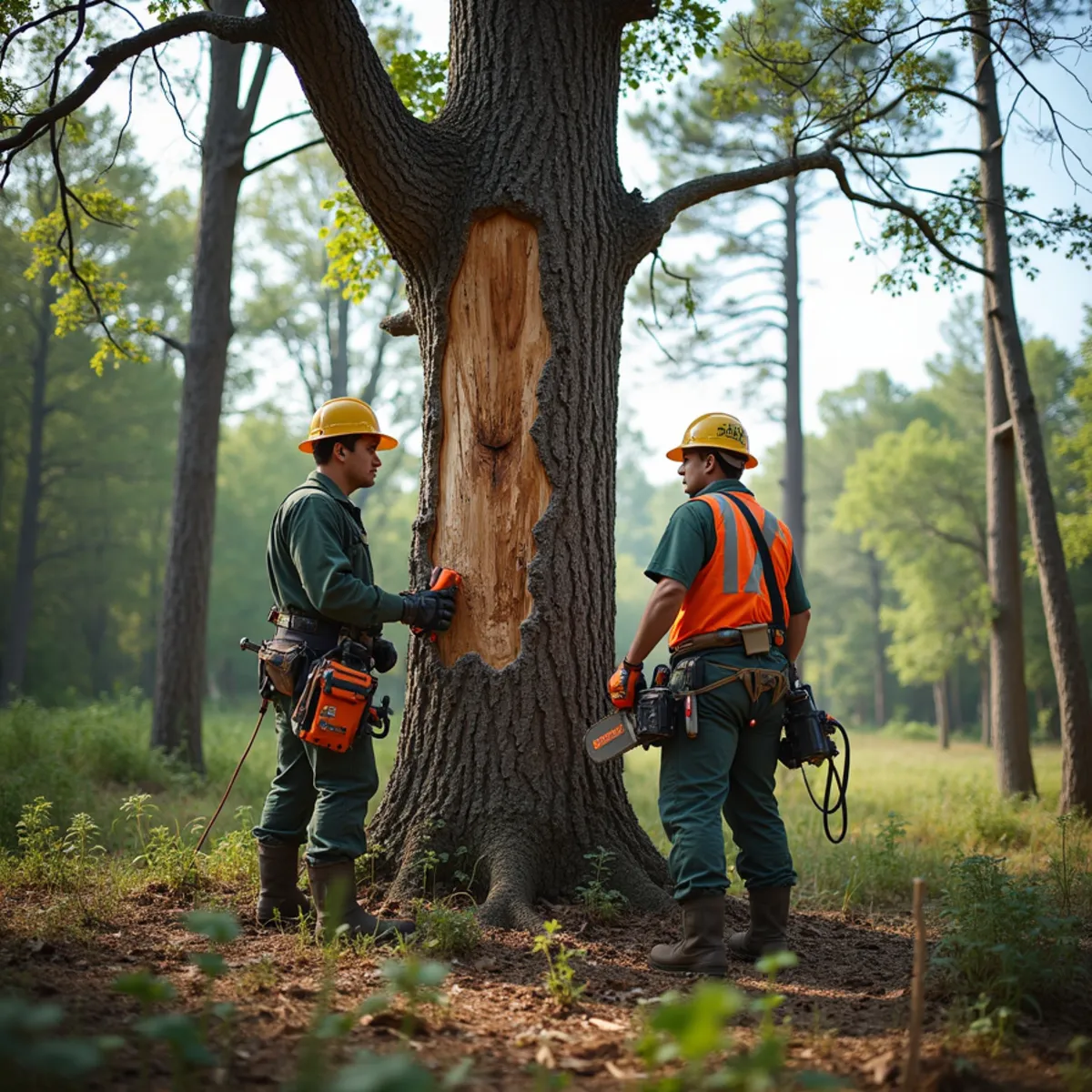
If you have a bare, brittle ash tree standing in your yard, you are looking at the legacy of the emerald ash borer — an invasive beetle that has killed the vast majority of ash trees across Michigan. These dead ash are not just an eyesore; they are one of the most dangerous trees to have near a house, and they get worse every year they stand.
What the ash borer does
The larvae of this beetle tunnel just under the bark, cutting off the tree’s ability to move water and nutrients. Over a few years the tree starves and dies from the top down. By the time the canopy is bare, the borer’s damage to the wood is already done.
How to spot an ash borer-killed ash
- A thin or bare canopy, often starting at the top.
- D-shaped exit holes about an eighth of an inch across in the bark.
- S-shaped tunnels (galleries) under loose bark.
- Bark "blonding" where woodpeckers have stripped the outer bark to reach larvae.
- Sprouts (epicormic shoots) along the trunk as the tree tries to survive.
Why dead ash are so dangerous to remove
Here is the part homeowners underestimate: dead ash become brittle fast. The wood loses its flexibility, limbs snap without warning, and the whole tree can behave unpredictably during removal. A healthy tree bends and holds; a long-dead ash can shatter. That is why a dead ash near your home is not a "someday" project — every year it stands, it becomes more hazardous and more difficult (and often more expensive) to take down safely.
Remove before it fails on its own
The math is simple. Removing a dead ash on your schedule, with the property protected and the work planned, is safer and usually cheaper than an emergency call after it drops a limb on your roof or across your driveway in a storm. Because the wood is unreliable, we plan these removals carefully — often with rigging — rather than treating them as routine.
What about treatment?
Why a Dead Ash Gets More Dangerous — and Pricier — Every Year
Most dead trees are hazards, but ash killed by emerald ash borer are in a category of their own, and the reason is how the wood changes after death.
A living tree, even a declining one, is flexible. Its wood absorbs shock, bends in the wind, and holds together when a climber ties in. A long-dead ash does the opposite: it dries out and turns brittle, the bark sloughs off, and the wood becomes unpredictable — a limb that should flex instead snaps without warning, and a section that looks solid can shatter mid-cut. Climbing a dead ash is genuinely more dangerous than climbing almost any live tree, which is why experienced crews often switch to a bucket truck or crane and treat these removals with extra caution.
That fragility is also why the price climbs the longer you wait. A recently dead ash can sometimes still be climbed and taken down efficiently. Two or three years later the same tree may require equipment, more rigging, and slower work — a bigger, costlier job for an identical tree, and that assumes it has not already dropped a limb on the roof or the driveway in the meantime.
The takeaway is blunt: a dead ash near anything you care about is not a someday project. Removing it while the wood is still relatively sound is safer for the crew and cheaper for you.
Preventive insecticide treatments exist for high-value ash that are still healthy, but they are not a fix for a tree that is already dead or far gone. If you have a prized ash showing early, minor symptoms, it is worth asking an arborist whether treatment makes sense. For the dead and dying ones, removal is the answer. Our oak wilt and diseased tree removal page covers how we handle diseased and pest-killed trees.
D & B Tree Service provides free written estimates across Howard City and the surrounding West Michigan communities. For a storm hazard, call any time — the emergency line is answered 24/7.
Related services from D & B Tree Service
Serving tree service in Howard City, tree service in Stanton, tree service in Newaygo and across West Michigan.