
The Best Time to Trim Trees in Michigan
By D & B Tree Service · February 25, 2026 · 6 min read
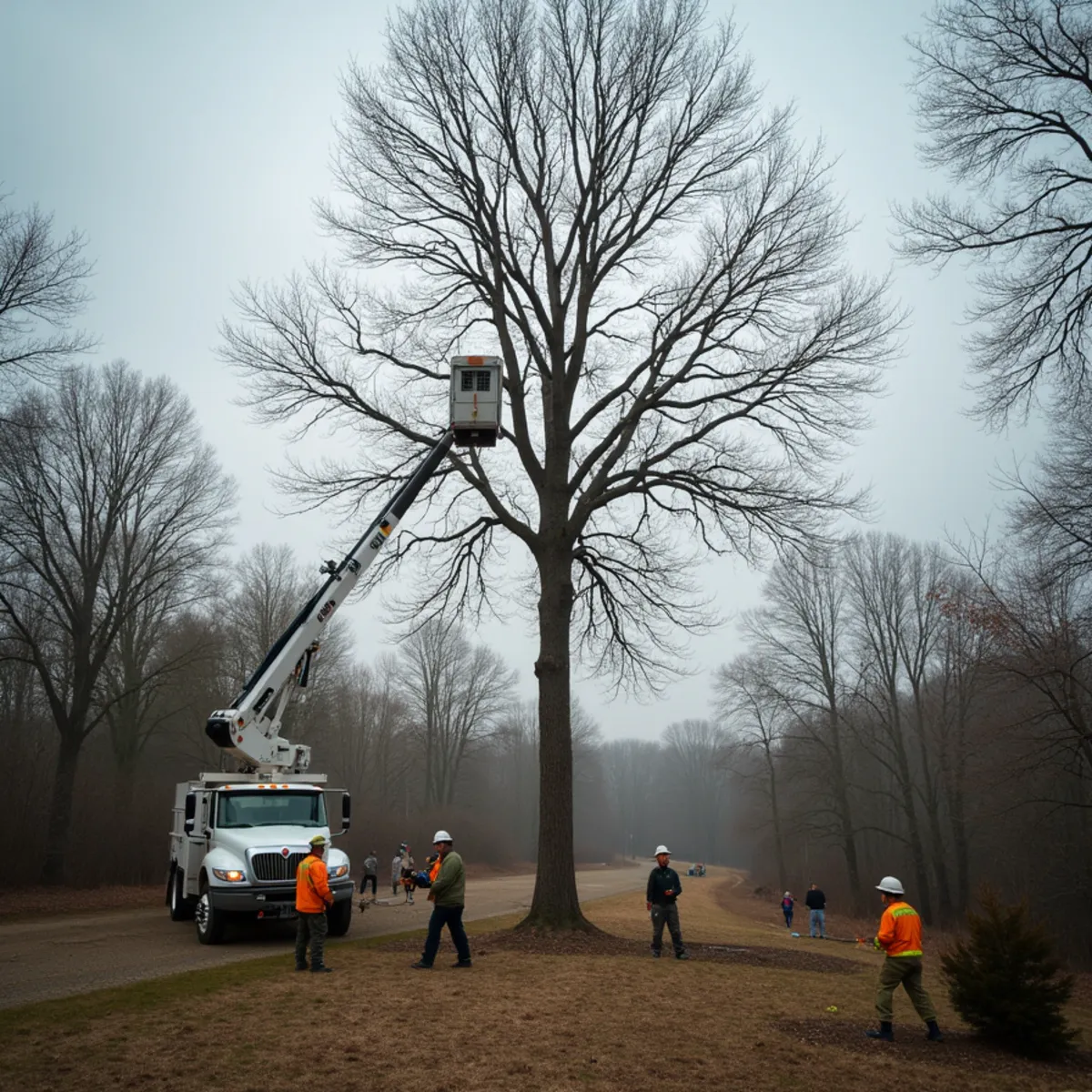
There is no single "best month" that applies to every tree, but there are clear guidelines that hold up well in West Michigan. For most species, the dormant season is ideal. For a few — oaks above all — timing is a matter of tree survival, not just preference.
Why dormant-season pruning is usually best
Late fall through early spring, when trees are leafless and dormant, is the sweet spot for most pruning. The tree is not spending energy on leaves, wounds close efficiently as growth resumes, insect and disease pressure is low, and — a practical bonus — the bare structure makes it much easier to see what needs cutting.
- Less stress on the tree while it is dormant.
- Lower risk of spreading disease when pests are inactive.
- Clear view of the branch structure with the leaves down.
- Frozen ground can mean better equipment access and less lawn damage.
The critical exception: oaks
Do not prune red oaks between roughly April 15 and July 15. That is the high-risk window for oak wilt, a fatal disease spread by beetles attracted to fresh cuts. Prune oaks in the dormant season instead. This one rule matters more than any other on the calendar — see our full oak wilt guide for why.
When other timing makes sense
Spring-flowering trees
For trees that bloom in spring (like crabapple or lilac), pruning right after they finish flowering avoids cutting off next year’s buds — if flowers are your priority.
Dead, damaged, or dangerous limbs
Deadwood and hazard limbs can and should be removed any time of year. Safety does not wait for the calendar. The same goes for storm damage.
Summer for light shaping
Light summer pruning can slow growth or correct a specific problem, but avoid heavy cutting in the heat, which stresses the tree — and never on oaks during the risk window.
What to avoid year-round
Regardless of season, avoid topping — cutting large limbs back to stubs. It creates weak regrowth and decay and shortens the tree’s life. Proper thinning, deadwood removal, and crown reduction are the right tools. If your goal is clearance from the house or driveway, that is a pruning objective a professional can meet without butchering the tree.
A West Michigan Pruning Calendar by Season
Timing is easier to get right when you match it to the season and the species. Here is how the year breaks down for the trees most common around Howard City.
Late fall through early spring (dormant)
The workhorse window. Most deciduous shade trees — maple, ash, locust, and the rest — are best pruned now, when they are leafless, wounds close efficiently as growth resumes, and disease pressure is low. Frozen ground also means cleaner equipment access and less lawn damage, so we schedule the bulk of our structural and reduction work here.
Spring (mid-April to mid-July): the oak exception
Do not prune red oaks in this window — it is the high-risk period for oak wilt. Save non-emergency oak work for the dormant season. Spring is, however, the time to prune spring-flowering ornamentals like lilac and crabapple, right after they finish blooming, if flowers are your priority.
Summer
Light shaping and clearance are fine, and summer is a good time to spot deadwood because it stands out against the green. Avoid heavy cutting in the heat, which stresses the tree, and stay off oaks until the window closes in mid-July.
Any time of year
Dead, broken, and hazardous limbs come off whenever they appear — safety never waits for the calendar, and the same goes for storm damage.
Not sure whether your tree needs pruning at all? Our tree trimming and pruning page explains the difference between a real problem and a cosmetic preference.
D & B Tree Service provides free written estimates across Howard City and the surrounding West Michigan communities. For a storm hazard, call any time — the emergency line is answered 24/7.
Related services from D & B Tree Service
Serving tree service in Howard City, tree service in Cedar Springs, tree service in Greenville and across West Michigan.